PT
 EN
 ES


Where it is and how you get there today
Lucena is on Paraíba's northern coast, across the Paraíba River from Cabedelo. Today there are two routes: the ferry from Cabedelo, with limited capacity and subject to the weather, or the land detour, going around the river on state highways.
It is that crossing that keeps Lucena quieter than the rest of the coast — and it is precisely the crossing whose days are numbered.
The seven beaches
Lucena has seven beaches spread over some 15 kilometres of coast — and they are quite different from one another:
- Costinha — the first for those arriving by ferry. Quiet, with clear water and fine sand
- Fagundes — one of the largest, ringed by holiday houses, coconut palms and mangrove
- Gameleira — between the central beach and Fagundes, quiet and ringed by coconut palms
- Ponta de Lucena — bancos de areia que aparecem na maré baixa
- Praia de Lucena — a central, de areia dourada e água calma
- Camaçari — long and almost deserted, running to the Miriri River on the Rio Tinto border
- Bonsucesso — at the mouth of the Miriri river, with the ruins of the Bom Sucesso church and the cliff-top viewpoint
Costinha holds a little-known history: for decades a Japanese-run whaling station operated there, processing whales caught in the South Atlantic.
What to see there
Lucena is not only beach — it has one of the oldest historic ensembles on the Paraíba coast.
- Sanctuary of Nossa Senhora da Guia — built around 1591 by Carmelite monks, atop a cliff overlooking the beaches below. It is said to hold Brazil's largest limestone altar
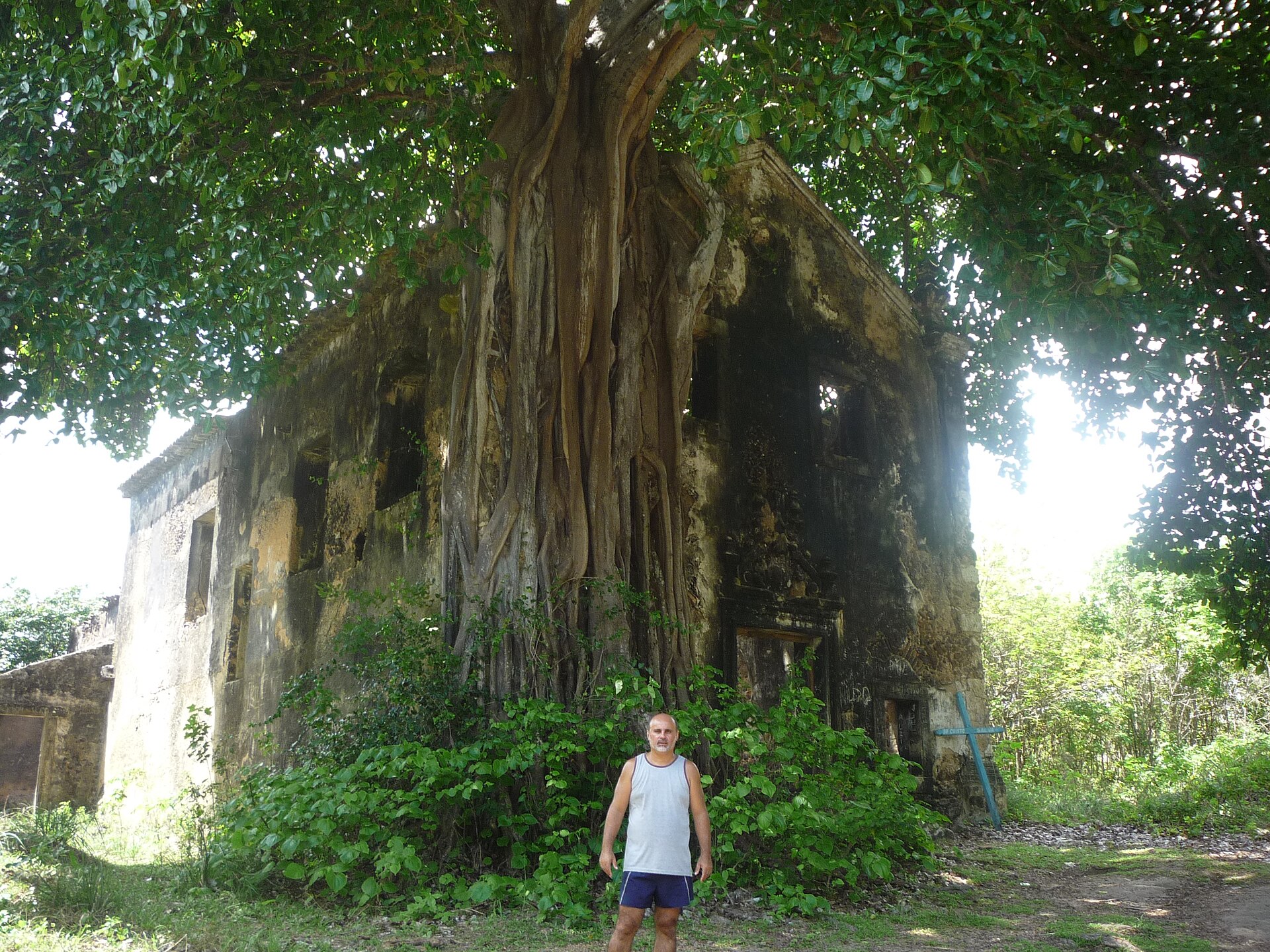
- Ruins of the Nossa Senhora do Bom Sucesso church — 18th century, at the mouth of the Miriri river, with a fig tree wrapped around the walls. You reach them by wading the shallow part of the river at low tide and following a trail of about ten minutes; from the viewpoint you can see almost the whole Lucena coastline
- Cliff lookout — a panoramic view of the coastline
- Praia de Lucena — the main one, with golden sand, calm water and plenty of palm trees
- Ponta de Lucena — rougher and less developed, for those who like to walk
At low tide the shoreline reveals the fish corrals — traditional fishing enclosures that, with the sea pulled back, form large shallow pools. There are jangada trips to see them up close.
The trip from João Pessoa takes about half an hour by car, including the crossing.
The Ponte do Futuro
The link between Cabedelo and Lucena is under construction. The main structure will be about 2.1 kilometres and will connect the BR-230, in Cabedelo, to the BR-101 North. There is also a second bridge, of about 420 metres, over the Rio da Guia in Lucena.
The Paraíba state government officially expects it to be finished in the last quarter of 2026. As with any project of this size, the deadline may move — worth checking before you plan your trip.
- Main structure: about 2.1 km, linking the BR-230 to the BR-101 North
- Second bridge: about 420 m over the Guia River, in Lucena
- Today: ferry crossing from Cabedelo, or the route around on state highways
What changes for travellers
Without depending on the ferry, Lucena stops being a full-day outing and becomes an afternoon destination. It also changes things for property owners in the area: easy access usually means more demand for accommodation and better rates.