PT
 EN
 ES


Paraíba History Museum, in the Palácio da Redenção
Housed in the former Government Palace, on Praça João Pessoa, downtown. The museum is split between contemporary rooms, with exhibitions on different periods of Paraíba's history, and historic rooms that preserve the palace's original layout.
Outside stands the mausoleum holding the remains of João Pessoa — the president of Paraíba whose assassination in 1930 gave the city its name and helped trigger the 1930 Revolution.
Free entry. From Tuesday to Saturday you can visit freely, from 9am to 4pm. On Sundays there are only guided tours, at fixed times: 9am, 11am, 1pm and 3pm.
José Lins do Rego Cultural Centre
Opened in 1982, it is the state's largest cultural complex — and the one visitors most overlook. At a single address it brings together four performance venues (Teatro Paulo Pontes, Teatro de Arena, Sala Roberto Cartaxo and the Maestro José Siqueira Concert Hall), the José Lins do Rego Museum, the Archidy Picado Gallery and the Historical Archive.
For those travelling with children, the case is different: the Cultural Centre has a planetarium and a science centre, as well as the Juarez da Gama Batista Library and a comics library.
It is at Av. Dr. João da Mata, 200, in Jaguaribe, inside the State Administrative Centre. The programme changes every week — worth checking before you go.
Fundação Casa de José Américo
This is the easiest to fit in for anyone staying on the seafront: it is at Av. Cabo Branco, 3336, right on the shore. It is the house where José Américo de Almeida, the Paraíba writer and politician, lived, now turned into a museum.
The complex includes the Casa José Américo Museum, the Dumerval Trigueiro Library, a documentary archive and the writer's mausoleum. The foundation runs a permanent programme, with a film club and fairs.
Open Tuesday to Sunday, 9am to 4pm.
The mansions of the Historic Centre
Casarão dos Azulejos — an eighteenth-century building, once the home of the merchant Antonio Santos Coelho, recognisable by its façade clad in Portuguese tiles.
Casarão 34 — a cultural venue in the historic centre, open to the public Monday to Friday, morning and afternoon.
Paço Municipal — a neoclassical building from the early 20th century, still in administrative use.
Academia Paraibana de Letras — founded on 14 September 1941, it occupies one of the mansions in the old centre.
Casa da Pólvora
Built between 1704 and 1710 as an ammunition and weapons store, it is one of the city's oldest landmarks — listed by IPHAN in 1938. It stands on Ladeira São Francisco, in the Historic Centre, and houses the Walfredo Rodrigues Photographic Museum.
Check before going. At our last look, the city council's official page still carried a temporary closure notice left over from the pandemic. The information is probably out of date, but we could not confirm the reopening — call ahead before adding it to your plans.
The rest of the old town, within a ten-minute walk
The city's official tourist map marks more than twenty points in the historic centre, nearly all on the same walk. Worth knowing they exist before you go, because none of them has a queue and almost all are free.
- Praça Antenor Navarro — the heart of the historic centre, ringed by restored coloured mansions. This is where the walk starts.
- Praça da Independência — where Paraíba declared its adherence to independence in 1822. A few metres from Parque Solon de Lucena.
- Museu da Cidade de João Pessoa — a história urbana contada em objetos, mapas e fotografias.
- Museu Casa do Artista Popular — crafts and folk art from Paraíba, in a mansion downtown.
- Pavilhão do Chá — the modernist pavilion by the Lagoa, reopened after the refurbishment of Solon de Lucena Park.
- Igreja de Nossa Senhora do Carmo — barroco do século XVIII, no mesmo conjunto do Centro Histórico.
- Estação Ferroviária — the Varadouro station is still in service: it is the João Pessoa stop on the train line linking Santa Rita to Cabedelo.
- Biblioteca Pública Estadual Augusto dos Anjos — named after the Paraíba poet, and the building is worth the stop even if you are not there to read.
- Estação das Artes e Celeiro Criativo — two creative-economy venues in restored buildings, with exhibitions, workshops and a shop selling local producers' work.
If your time is short, this is the shortlist: Praça Antenor Navarro, the São Francisco Cultural Centre and sunset at the Hotel Globo. The rest fits in if you have a spare morning.
More museums, galleries and theatres
Beyond the historic centre and the Espaço Cultural, the city has other addresses few guides mention:
- Usina Cultural Energisa, in Tambiá: housed in the capital's first electricity substation, from the early 20th century. Since 2003 it has hosted more than 5,000 cultural events, with galleries, concerts, cinema and a café; the programme runs Thursday to Sunday.
- Museu Casa de Cultura Hermano José, in Jardim Oceania: the visual artist's former home, now run by UFPB, with more than 7,500 items, seven exhibition spaces and a garden overlooking the sea. Free entry, on weekdays.
- UFPB Pinacoteca: founded in 1987 by Hermano José himself, it was João Pessoa's first art museum; it is in the campus Central Library.
- Núcleo de Arte Contemporânea (NAC/UFPB): created in 1979 for avant-garde art, now being revitalised — check the schedule first.
- Theatres: besides the Santa Roza, the city has the Teatro Pedra do Reino at the Convention Centre, which hosts the big touring shows, and the UFPB theatres.
The Tito Silva wine factory and the Workshop-School
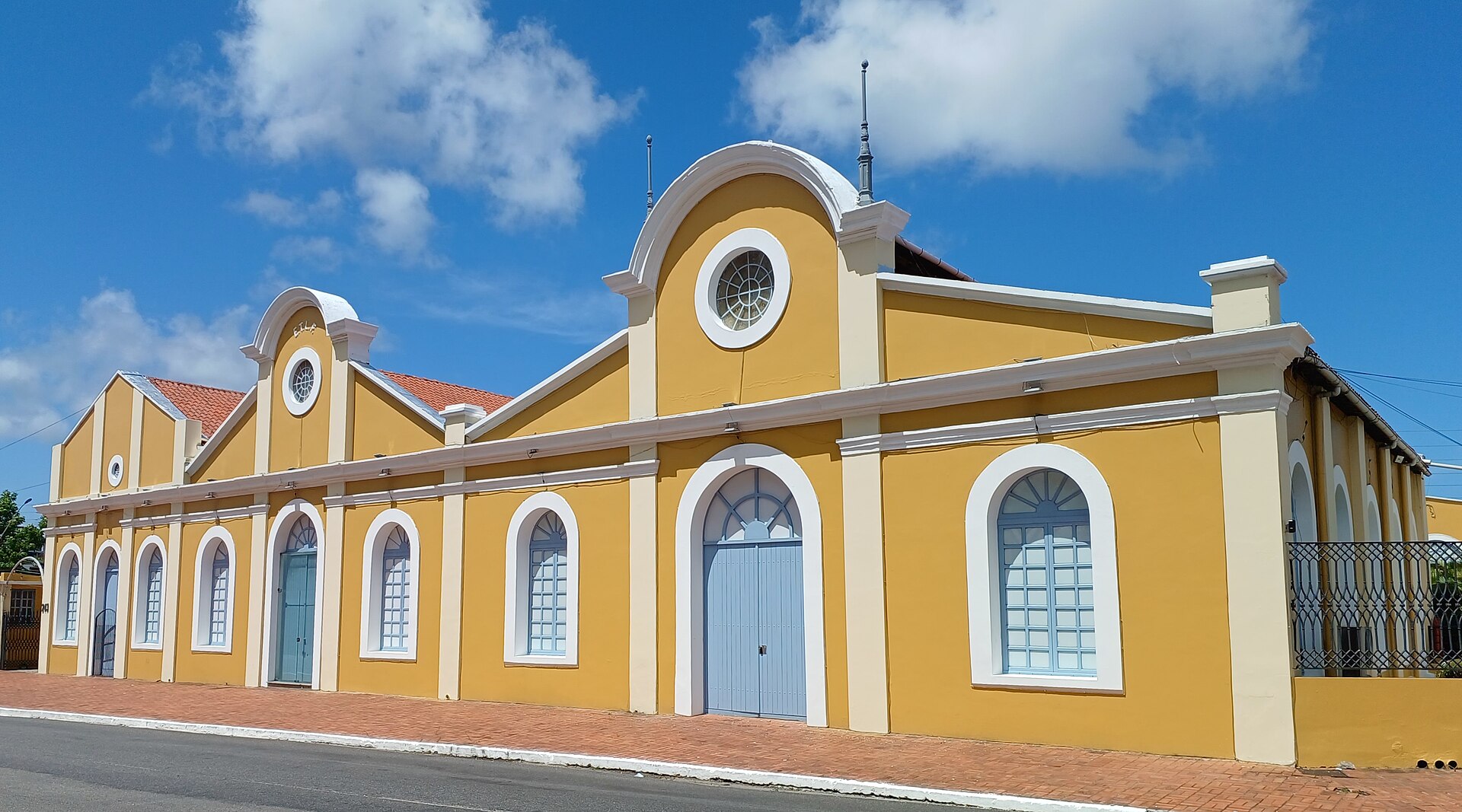
In the historic centre stands the Tito Silva Wine Factory, founded in 1892 — the first cashew-wine factory in the Northeast, which exported to the United States and Germany. It closed in 1984, was listed by IPHAN that same year and restored between 1997 and 2003.
It houses the Workshop-School for the Revitalisation of Cultural Heritage, set up in 1991 in cooperation with Spain, which trains young people in restoration trades — they helped bring much of the downtown's old buildings back to life.
Porto do Capim and the Museu Vivo Olho do Tempo
On the banks of the Sanhauá river, behind Varadouro, Porto do Capim is where the city was born: it was João Pessoa's main port before Cabedelo's existed. Today it is a riverside community tied to fishing and the river — best visited with a guide or on an organised tour.
At the other end of the city, in the Gramame valley, the Museu Comunitário Vivo Olho do Tempo gathers objects and memories of the area's rural and fishing communities, put together by residents, children and masters of oral tradition. Entry is free.
If you are travelling for work
The Poeta Ronaldo Cunha Lima Convention Centre, in Jacarapé, is where the city's large events and conferences take place — and is usually the reason for the trip of those coming on business rather than for leisure.
It sits at the far southern end of the urban seafront, well away from Manaíra and Tambaú. If your event is there, factor in the daily commute when choosing where to stay — and take advantage of the Historic Centre museums' business hours to fit in a morning before registration.
How to fit it into your trip
The Historic Centre is best done on foot: the Palácio da Redenção, the old mansions, Casa da Pólvora, Teatro Santa Roza, Hotel Globo and the São Francisco Cultural Centre are a few blocks from one another. Set aside a morning and go early, before the heat.
The Cultural Centre lies outside that circuit, in Jaguaribe, and needs its own trip. The José Américo House, on the other hand, is on the Cabo Branco seafront — it pairs well with a late afternoon at the beach. See the 3-day itinerary to fit it all in.
We work with local partners in João Pessoa for airport transfers, guided tours and car rental. Tell us what you'd like to do and we'll point you to the right one.
Message MAREVI on WhatsApp