PT
 EN
 ES


Where the Costa do Conde is
Conde is the municipality just south of João Pessoa. The town itself is about 13 km from the sea, but the draw is the Costa do Conde: some 17 km of coastline between Barra de Gramame, on the border with the capital, and Barra do Graú, on the border with Pitimbu.
From the João Pessoa seafront to Jacumã is about 28 km, half an hour by car; to Tambaba, around 39 km, under an hour. This is the coast of coloured cliffs, coconut groves and natural pools that features in most photos of Paraíba.
There are two explanations for the name: a tribute to Count Maurice of Nassau, from the Dutch period, or the sugar apple (fruta-do-conde) common in the area. The settlement grew from the Indigenous village of Jacoca and became a municipality in 1963.
The ten beaches, north to south
- Barra de Gramame: where the river meets the sea, on the João Pessoa border.
- Praia do Amor: cliffs and the Pedra Furada.
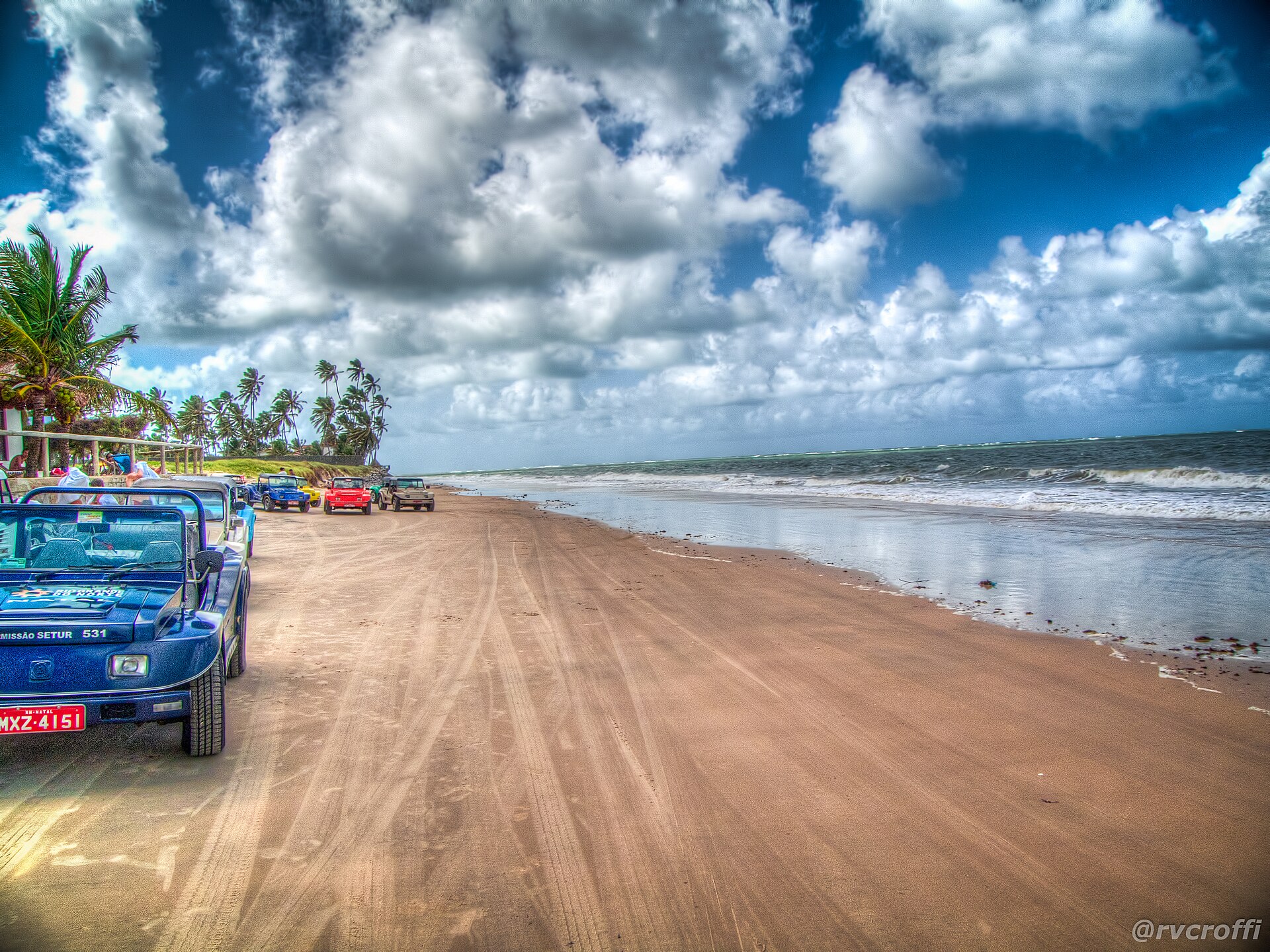
- Jacumã: the main village, with facilities, restaurants and the buggy-tour departure point.
- Carapibus: natural pools at low tide, good for children.
- Tabatinga: cliffs and a viewpoint, with calm sea.
- Coqueirinho: the most famous, with the Dedo de Deus viewpoint and the Castelo da Princesa rocks.
- Arapuca: secluded, with coloured cliffs, good for surfing.
- Tambaba: the first official naturist beach in the Northeast, with an area for non-naturists.
- Barra do Graú: the mouth of the Graú river, on the Pitimbu border.
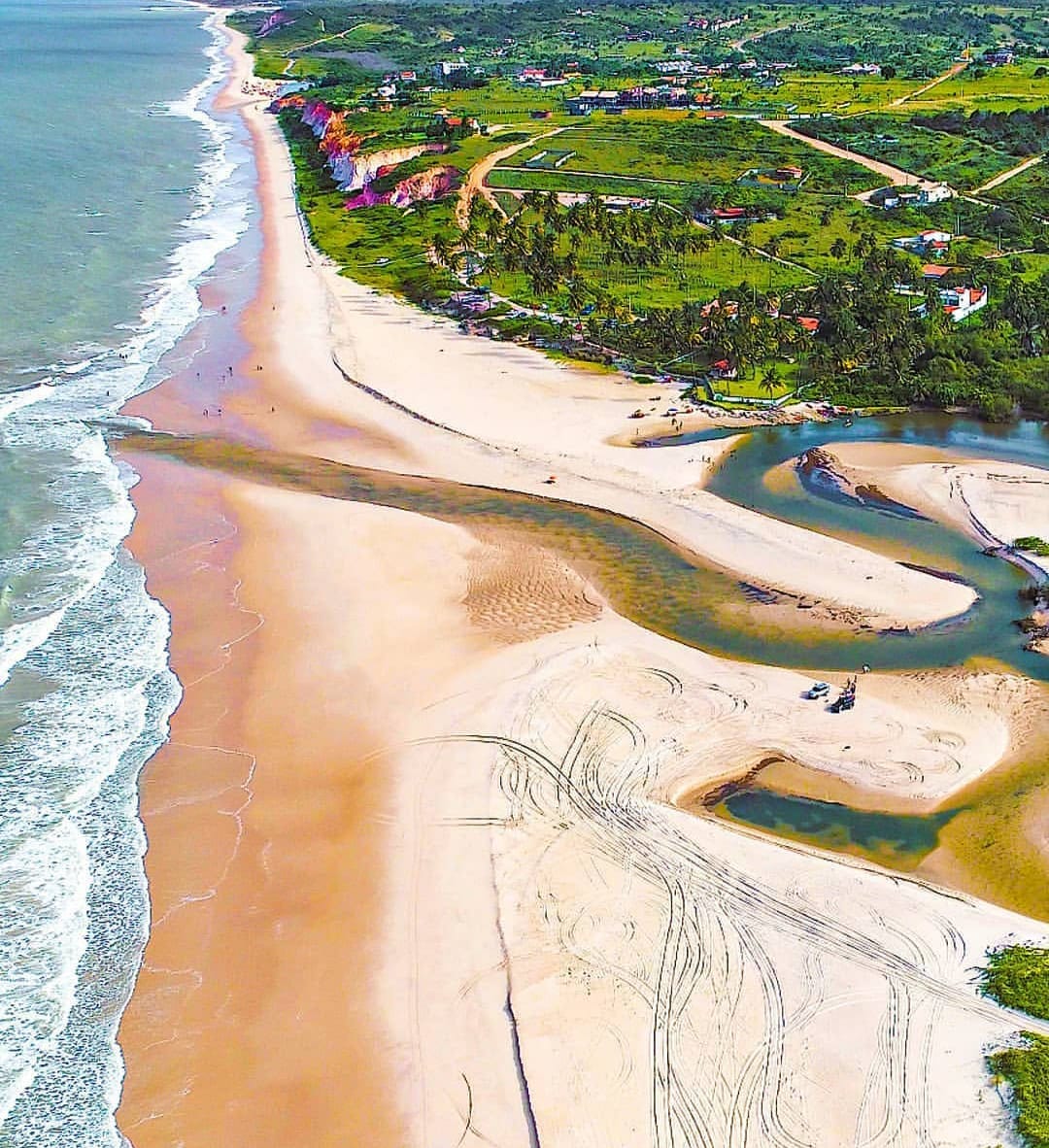
- Praia Bela: across the river, already in Pitimbu, with river and sea side by side.
- Coqueirinho beach
- Tabatinga beach
- Tambaba beach
- Carapibus beach
- Barra de Gramame beach
- Praia Bela: where the river meets the sea
Praia do Amor and the Pedra Furada
Praia do Amor has reddish cliffs and a landmark: the Pedra Furada, a rock arch at the water's edge. Legend says a couple who pass through it together are guaranteed happiness — which is why there is always a queue for the photo. The Pedra Furada also marks where Jacumã begins.
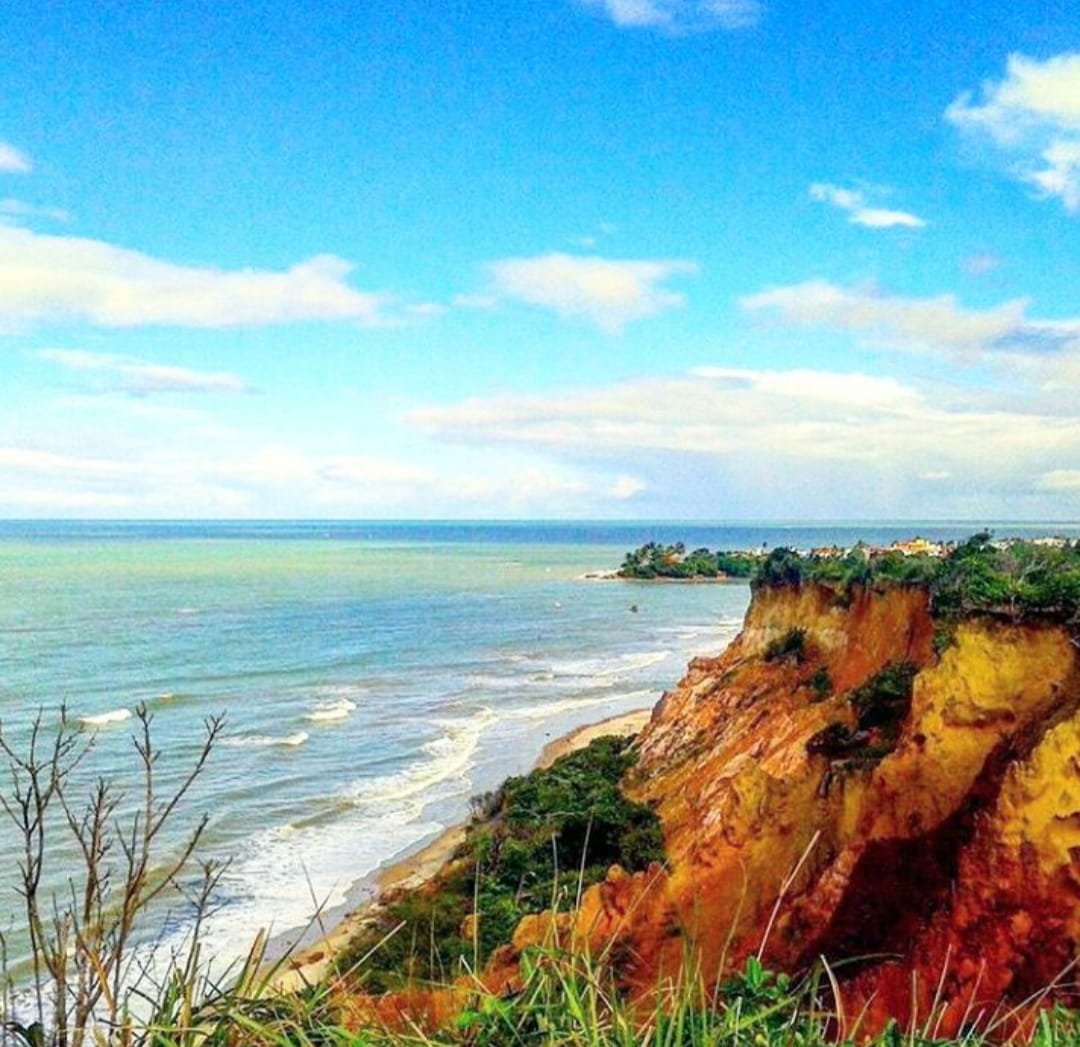
Go at low tide: that is when you can walk to the rock and pools form around it.
Jacumã, the base for the south coast
Jacumã is the best-equipped village on the Costa do Conde: restaurants, small shops, guesthouses and the departure point for the buggies that tour the beaches and viewpoints. If you are spending the day on the south coast, it is where to have lunch and where to go if you need anything.
Arapuca and Barra do Graú: the quieter south
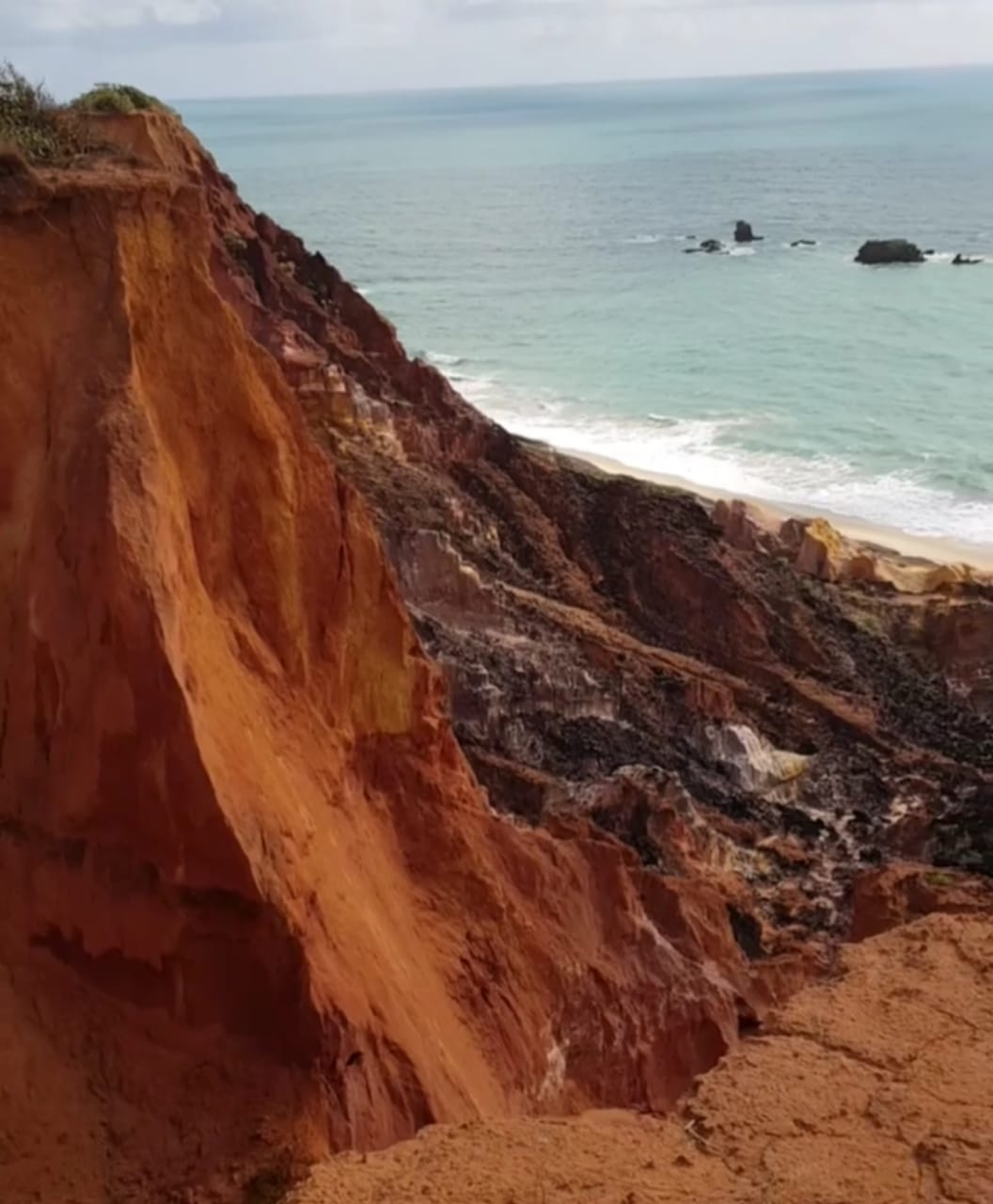
Arapuca is a secluded beach ringed by cliffs that turn into coloured rock walls. Access is by trail or down the cliff from Tambaba's upper car park, and the sea has waves all year — it is a favourite with local surfers. There are no facilities: bring water and food.
At the southern tip, Barra do Graú is where the Graú river meets the sea, on the Pitimbu border. It has seafood shacks and, across the river, Praia Bela.
The viewpoints
- Dedo de Deus viewpoint, at Coqueirinho: the most visited on the Costa do Conde.
- Castelo da Princesa, at Coqueirinho: a formation of coloured rocks, a must-stop.
- Tabatinga viewpoint: the curve of the beach seen from the top of the cliffs.
- Barra de Gramame viewpoint: the whole horizon, with the river flowing into the sea.
Buggy tours from Jacumã link several of them in an afternoon; you can also drive, but some of the roads are unpaved.
Making the most of it from João Pessoa
The Costa do Conde is close enough for an unhurried day trip: beach in the morning at low tide, lunch in Jacumã or Coqueirinho and viewpoints in the late afternoon. Check the tide table first — the natural pools and the Pedra Furada depend on it.
MAREVI manages serviced flats and apartments on the João Pessoa seafront, half an hour from the south coast, with a full kitchen and our own team. Book directly on WhatsApp and you skip the platforms' fee.