PT
PT EN
EN ES
ES
O sol nasce aqui primeiro
Ponta do Seixas is the point of mainland in the Americas closest to Africa. This was officially verified in 1941 and is not tourist hyperbole: the sun rises there before anywhere else on the American continent.
In practice, dawn comes early — usually between five and half past five, varying with the season. Anyone wanting to see it has to get up before daybreak, and it is one of the few things in the city worth the alarm clock.
Above the point stands the Cabo Branco cliff, with the lighthouse on top. For a long time the cliff itself was considered the easternmost point, until coastal erosion pushed the rock back and handed the title to Seixas, less than a thousand metres to the south.
The sea is calm because of the reef
Almost the whole João Pessoa seafront is protected by a reef barrier a few hundred metres offshore. It is what holds back the surf and leaves the water still, shallow and warm for much of the day.
That changes the trip for anyone travelling with children or who isn't a strong swimmer. It is also what forms the natural pools: at low tide the reefs emerge and create pools of clear water out at sea.
The best known are Picãozinho, off Tambaú, and Ilha de Areia Vermelha, in Cabedelo. Both exist only at low tide, so the trip depends on the day's tide table — not on your calendar.
A capital you can cover on foot
From Bessa to Cabo Branco is about seven kilometres of continuous seafront, with a promenade from end to end. The beach neighbourhoods sit right next to each other, and the distance between a restaurant in Manaíra and the Tambaú craft market is walkable.
That is rare in a state capital. It means you can spend a week without renting a car, using a ride app only for the airport and for trips out of town.
Each seafront neighbourhood has its own rhythm, and choosing the right one matters more than choosing the building. Manaíra is where the city dines; Tambaú is the postcard; Cabo Branco is the quietest stretch; Bessa and Jardim Oceania belong to the locals.
The greenery: what's true and what's legend
You will read in many places that João Pessoa is the second greenest city in the world, behind Paris. It isn't. The claim came from a statement by the city's mayor during the Eco-92 summit in Rio de Janeiro, and never corresponded to any institution's study.
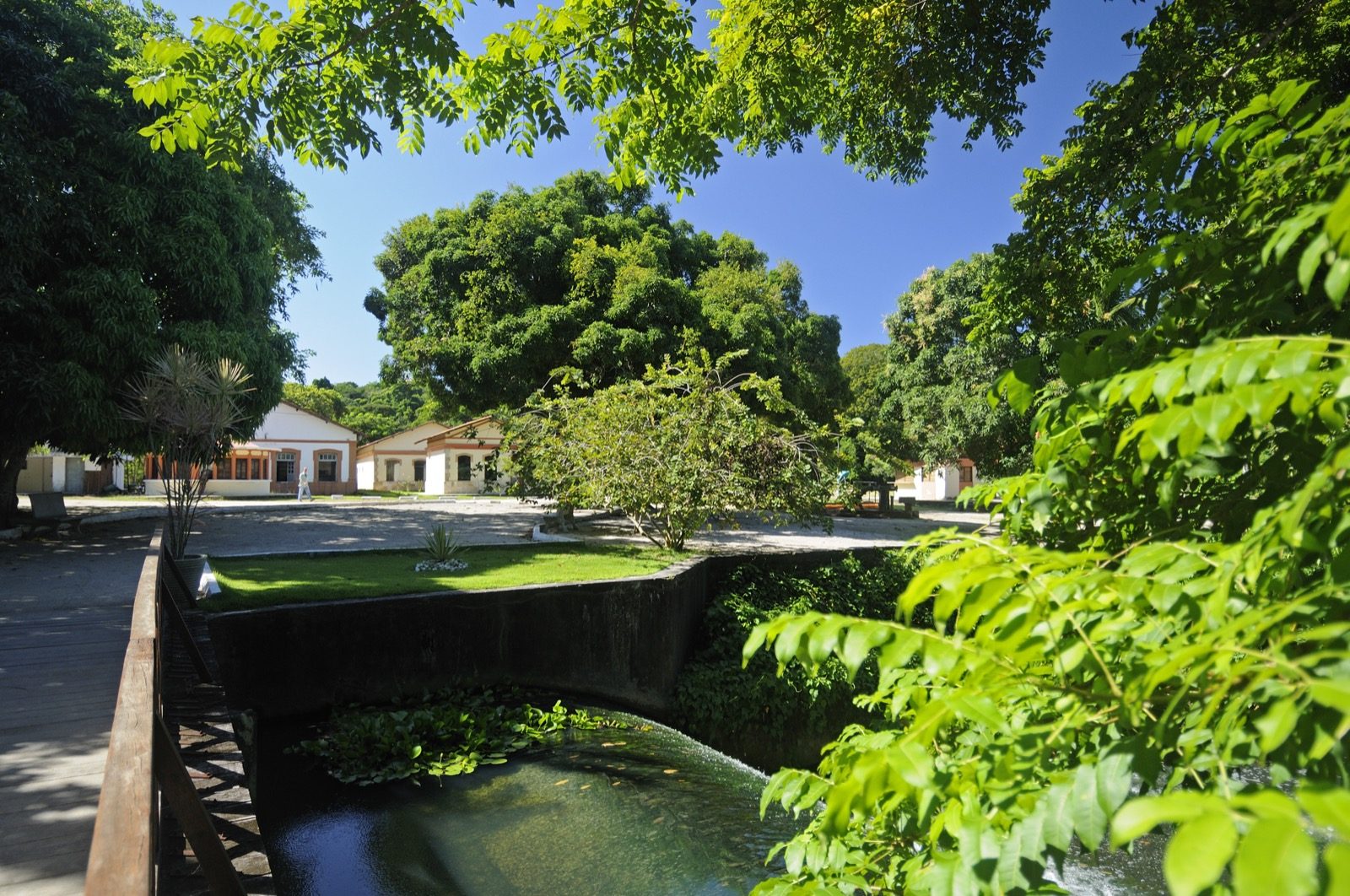
What is actually true is better than the legend, and less quoted: the Mata do Buraquinho, 515 hectares of preserved Atlantic Forest surrounded by the city, turned into a Botanical Garden in 2000. An entire forest inside the urban area, with trails open to visitors.
Add to that the Lagoa — Parque Solon de Lucena, downtown, ringed by imperial palms — and the tree cover along the northern seafront, in Jardim Oceania and Bessa. The city is genuinely green. Just not in the way the slogan claims.
1585
João Pessoa was founded in 1585, which puts it among Brazil's oldest cities. It began as Cidade Real de Nossa Senhora das Neves, became Filipeia de Nossa Senhora das Neves in 1588, then Frederica under Dutch rule, then Parahyba — and only took its current name in the twentieth century.
Those four centuries still stand in the Historic Centre, a few kilometres from the beach: the Palácio da Redenção, the Teatro Santa Roza, the Hotel Globo with its view over the Sanhauá River, the Basilica of Nossa Senhora das Neves.
It is the counterpoint of the trip. Half an hour separates the seafront promenade from seventeenth-century townhouses, and almost nobody who comes for the beach knows this before arriving.
A base for the whole coast
João Pessoa works well as a fixed base. To the north, Cabedelo is twenty minutes away and holds the Jacaré Beach sunset, the Santa Catarina Fortress and the departure point for Areia Vermelha. Further on, Lucena.
To the south, the PB-008 reaches Conde in about forty minutes: Coqueirinho, Tabatinga, Carapibus and Tambaba, with coloured cliffs and natural pools. Seventy kilometres further on is Pitimbu, with Praia Bela and Acaú.
And in June you can sleep by the beach and drive up to the São João festival in Campina Grande at night. Two hours on the road, and accommodation on the coast costs far less than in the festival city.
Quando ir e quanto custa
- September to February — the best window. Settled weather and calm sea, which is when the natural pools are at their best.
- September to November — the best value: the same sun, fewer people and lower rates than over New Year.
- March to August — the rainiest period. It rains more, but rarely all day, and the city empties out.
- June — São João month, when Campina Grande fills up. Booking ahead changes the price.
Our rates in João Pessoa start at R$ 150, varying by property and season. Flats and apartments tend to deliver more comfort for less on stays of three nights or more, because they have a kitchen, laundry and more space than a hotel room.
Where to stay
MAREVI manages flats, apartments and studios in five seafront neighbourhoods: Tambaú, Manaíra, Bessa, Jardim Oceania and Cabo Branco. All within walking distance of the beach, with our own team in the city.
If you are still deciding on a neighbourhood, it is worth reading the comparison before choosing the building — it is the decision that changes the trip most.