PT
PT EN
EN ES
ES
The rock, and why it matters
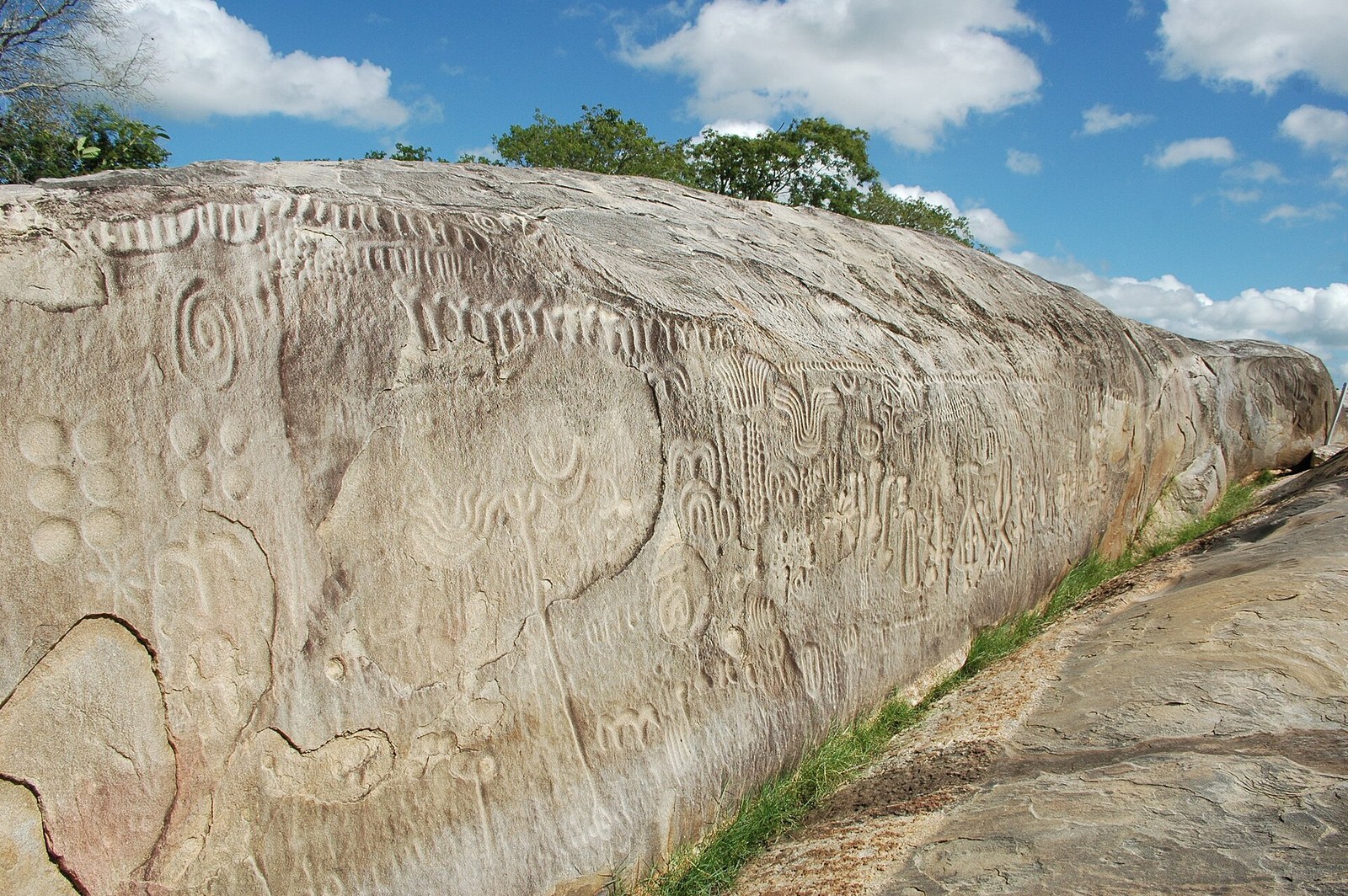
A Pedra do Ingá é um afloramento de gnaisse coberto de inscrições rupestres, estudado por pesquisadores do mundo inteiro e ainda sem interpretação fechada. Foi o primeiro monumento rupestre tombado no Brasil, em 1944.
It sits in the Parque das Itacoatiaras, in Ingá, 105 quilômetros de João Pessoa — about two hours by car on the BR-230, heading up towards Campina Grande. The park holds the rock and a natural history museum, with originals and replicas.
The river runs around the rocks. In the wet season it forms small falls, and the visit changes character — worth checking the water level before setting off, especially between March and July.
The mistake almost everyone makes
See the rock, take the photo, drive back to the capital. The whole visit takes under an hour, which is little for two hours on the road each way.
Since 2025 there has been a route built to solve exactly that: the Rota Culturas e Tradições, do programa de roteirização do Sebrae Paraíba em parceria com o governo do estado, ligando Ingá à vizinha Mogeiro. O foco é turismo de experiência — o visitante entra na cozinha, na casa de farinha, na oficina de renda.
What to do in Ingá
- Memorial do Cuscuz — a casa de Dona Lia Mendes, agricultora que começou vendendo cuscuz na rua e transformou o quintal em restaurante. Serve o cuscuz de cabeça amarrada, tapioca e café. Grupos grandes precisam agendar.
- Fazenda Serra Verde — queijaria premiada, com medalha de ouro no queijo coalho tradicional e prata no queijo de manteiga no 2º Concurso de Produtos Lácteos da Paraíba.
- Labirinteiras de Chã dos Pereira — twenty-two women who keep the labirinto lace alive, passed from mother to daughter, and now apply it to clothing too. There is a shop.
- Sítio da Pedra Encantada — a rural guesthouse with twenty beds, an orchard, a vegetable garden and trails. One leads to the cave where, tradition says, the outlaw Antônio Silvino hid; the other climbs the Pedra Verde, at 500 metres, and is done late in the day for the sunset.
- Pau de arara — the adapted truck that carries people in the back, still how many get to market. For locals it is transport; for visitors, it is optional.
The guesthouse turns the day trip into two nights, which completely changes the maths of the drive.
And what to do in Mogeiro
Mogeiro sits right next to Ingá and has coloured townhouses. It is the stop almost nobody makes.
- Budega de Seu Antônio — em funcionamento desde os anos 1950, com o aspecto original preservado. Serve cachaça no coco.
- Memorial Casa de Farinha, na Serra do Cabral — conta a importância da mandioca na travessia das secas.
- Fazenda Vitória — a flour house where visitors join the whole process, from peeling the cassava to cooking the tapioca, with a rural restaurant alongside: free-range chicken, pirão, farofa d'água and cabidela.
- Crocheteiras de Mogeiro de Baixo — peças de vestuário, bolsas e artesanato de madeira na parte histórica da cidade.
The area also farms prawns and grows peanuts — which explains much of what reaches the table.
Is it worth it if you are staying at the beach?
Two hours on the road each way. As a day trip just to see the rock, we do not recommend it: too much travel for a short visit.
It is worth it in two cases. If you are already heading up to Campina Grande, Ingá is on the way and costs no extra driving. And it works as a two-day plan, sleeping at the rural guesthouse — then the whole route makes sense and the trip stops being a transfer and becomes an experience.
For anyone with four or five days in João Pessoa, the advice is the usual one: stay on the coast.
- São João in Campina Grande, based at the beach
- Campina Grande beyond the São João
- Areia: the Brejo, two hours from the beach
Before you set off
- Phone ahead to check that the Memorial do Cuscuz, the dairy and the flour house are open. These are family businesses, not tourist facilities with fixed hours.
- Groups need to book ahead at practically every stop.
- Some access roads are dirt. An ordinary car manages in dry weather; after rain, check first.
- Take cash. Not every producer has a card machine, and the mobile signal comes and goes.