PT
 EN
 ES

Why this glossary exists
Almost every bad review in short-term rentals comes from a misunderstanding rather than a real problem. Someone read “sleeps 3” and pictured three beds. Read “fitted kitchen” and expected an oven. Read “cleaning fee” and assumed it was a hidden charge.
The terms below are the ones that come up most in listings — ours and the platforms'. They are explained the way we would explain them over WhatsApp, because it is better to find out now than at check-in.
Beds and capacity
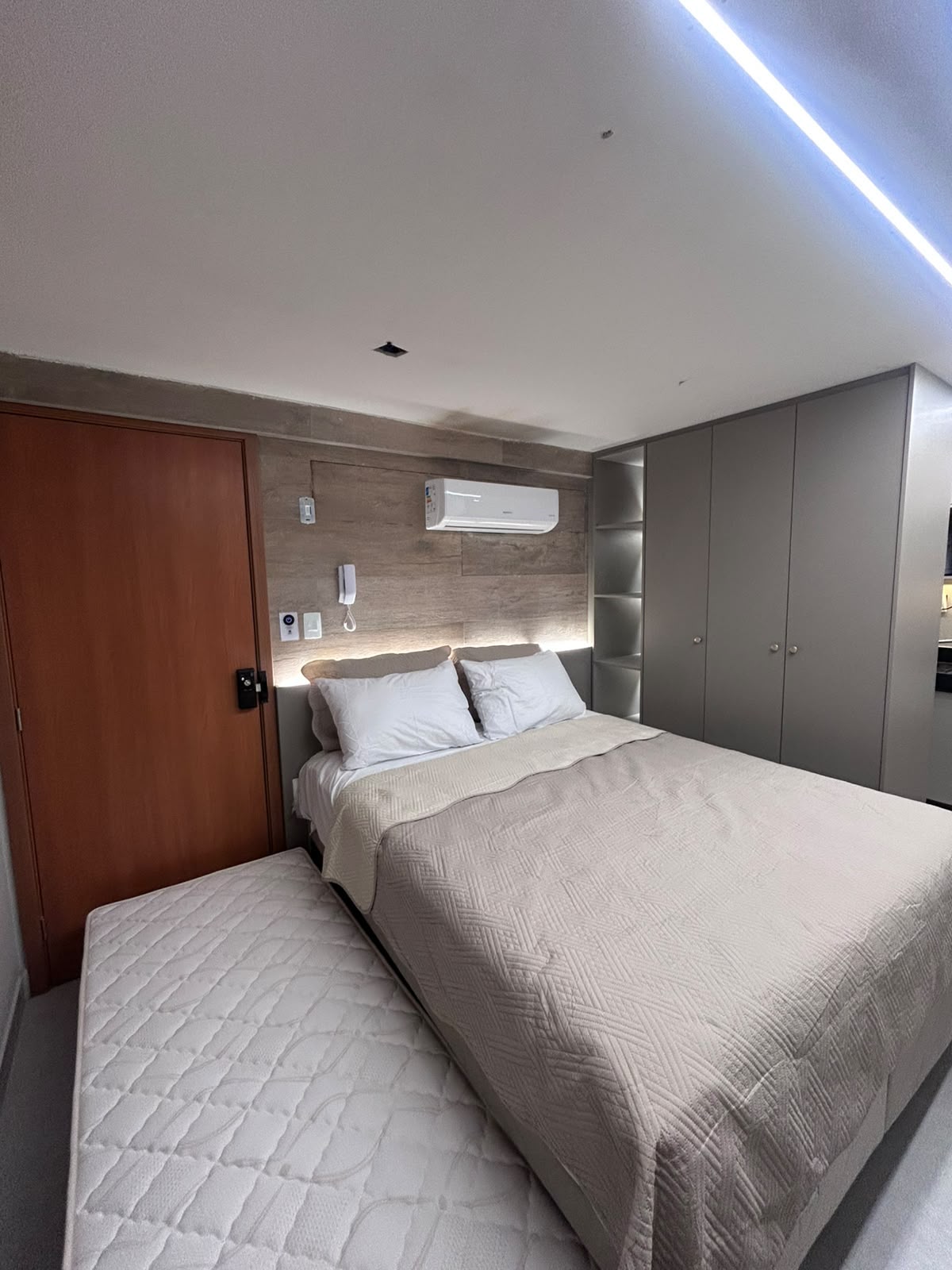
Extra bed — an additional single bed, placed in the same room as the main bed. It is not a second bedroom: there is no door and no partition, so whoever sleeps in it shares the room with whoever sleeps in the double bed. It is usually lower and narrower than a standard single bed.
It works well for a child, a teenager, or a third adult travelling with the couple who does not mind sharing the space. For three adults who do not know each other well, it usually does not work — a two-bedroom place is the better choice.
Booking sites call it by several names. They mean the same thing, or nearly:
- Extra bed — the most common name on international platforms.
- Futon — a Japanese-style mattress, thinner and firmer, used on the floor or on a low base. In Brazilian listings it is one of the most common names for an extra bed.
- Trundle bed — a single bed stored under another and pulled out when needed.
- Folding bed — a frame that folds away and is stored when not in use.
- Sofa bed — a sofa that converts into a bed. This one is different: it is in the living area, and the mattress is usually thinner.
- Loose mattress — just a mattress on the floor. Some listings count this as a bed; we do not.
Maximum occupancy — the number of people who may sleep in the property, children included. It is not a suggestion: it is the building's limit and ours, and it is the number that governs linen, breakfast and safety. Exceeding it means cancellation with no refund.
Double bed — in Brazil it is usually 1.38 m wide. A queen is 1.58 m and a king 1.93 m. If this matters to you, ask beforehand: anyone who sleeps badly notices the difference between a double and a queen.
The property
Flat — an apartment in a building with a front desk and shared facilities, designed for guests coming and going. It is neither a hotel room nor an ordinary residential flat.
Studio — a single-room property: bedroom, living area and kitchen in one space, with a separate bathroom. Almost every studio has a compact kitchen.
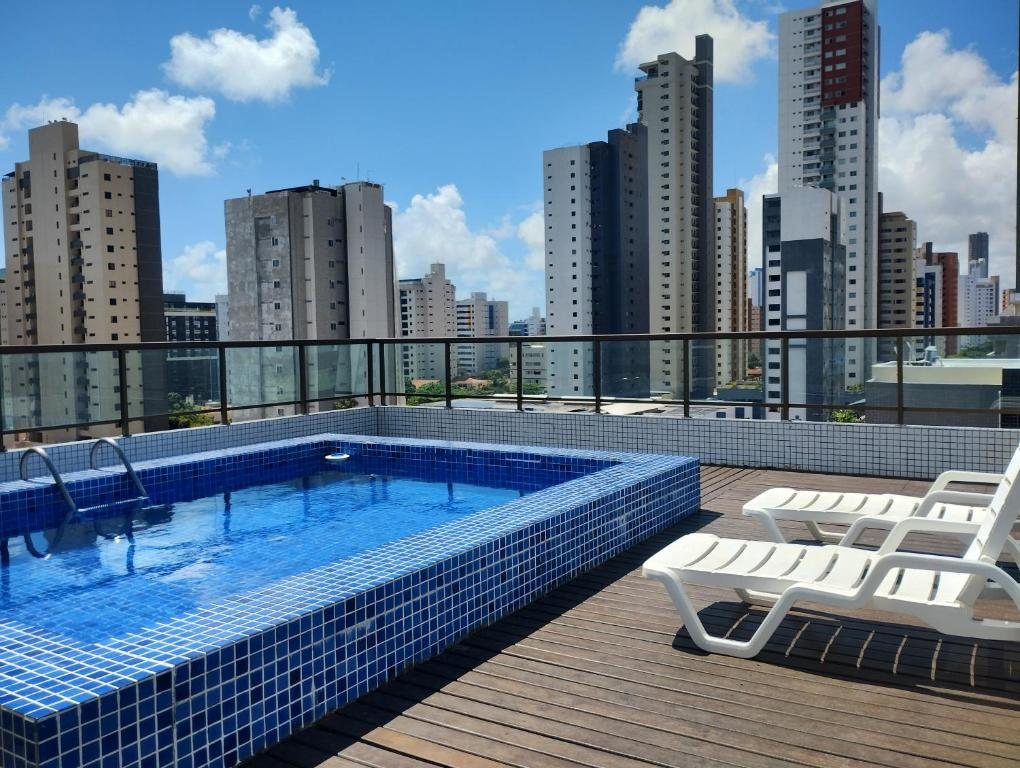
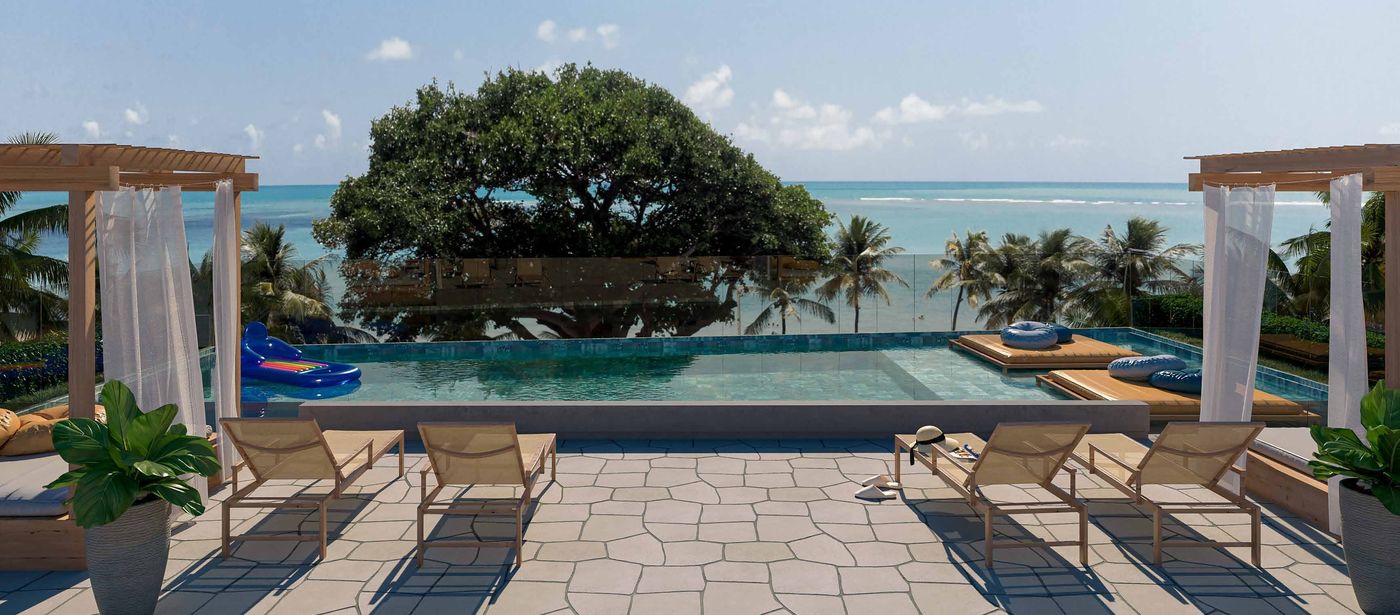
Balcony — the raised outdoor area with a railing. A terrace is uncovered outdoor space, which may be at ground level: in that case it offers privacy rather than a view. The rooftop is the top of the building, shared by all residents and guests.
Shared area — what belongs to the building and is used by everyone: pool, gym, laundry, lounge. Private area is what only the guests of that unit use. The difference changes the stay: a private hot tub and a building pool are not the same thing, even though both appear on a list of amenities.
The kitchen
Fitted kitchen — means you can actually cook: there is a hob or cooktop, a fridge or mini fridge, a sink, pans, plates and cutlery. It does not mean there is an oven, a microwave or a dishwasher — that varies and is listed for each property.
Cooktop — the hob built into the worktop, with no oven underneath. A mini fridge is the small single-door fridge common in studios and flats. An open-plan kitchen is one that opens onto the living area, with no wall between them.
Booking, nightly rate and charges
Nightly rate — the price of one night. A stay is counted in nights, not days: arriving Friday and leaving Sunday means two nights.
Cleaning fee — a single charge per stay, not per night. It covers the full clean and the change of linen between guests. Being fixed, it weighs more on a short stay: on a single night it can be a large share of the total.
Service fee — what the booking platform charges the guest on top of the nightly rate. It is not ours, and it does not appear when you book directly with the management company. That is why booking direct usually costs less for the same property.
- Minimum stay — the fewest nights we accept for that period. It rises in high season and over holidays.
- High and low season — in João Pessoa, high season runs from December to February, plus July and long holiday weekends. The rest of the year rates are lower and the city is emptier.
- Security deposit — an amount held as a guarantee against damage, returned after check-out if all is well.
- No-show — when a guest does not turn up and does not let us know. It generally carries no refund.
- Cancellation policy — the rules and deadlines for cancelling and getting your money back. They differ from property to property; read them beforehand, not after.
The owner's numbers
These three show up in any hospitality report and in every conversation about price. Looking only at the nightly rate usually leads to the wrong conclusion.
Occupancy rate — the percentage of nights sold in the period. Thirty nights available with twenty-one sold is 70% occupancy.
Average daily rate, or ADR — booking revenue divided by the number of nights sold. It is what a night earned on average, not the price shown in the listing: discounts, long stays and high season pull it in different directions.
RevPAR — revenue divided by the number of nights available, sold or not. It is the only one of the three that combines price and occupancy, which is why it is the one to compare with.
An example makes the difference clear. A property with an ADR of R$ 300 and 40% occupancy has a RevPAR of R$ 120. Another, with an ADR of R$ 200 and 70% occupancy, has a RevPAR of R$ 140. The second charges less and earns more.
That is why a high nightly rate is no sign of a good result, and why comparing with the neighbour rarely helps: you know the price they advertise, not how many nights they sold at it.
Arrival and departure
Check-in — arrival, and check-out is departure, each with its own time. The gap between one guest leaving and the next arriving is what makes cleaning possible: that is why the times exist and why they cannot flex on a full day.
Early check-in — arriving before the set time; late check-out is leaving after it. Both depend on there being no booking immediately before or after yours, so they can only be confirmed close to the date.
Self check-in — letting yourself in without meeting anyone, using a code or a key safe. A digital lock opens by code or fingerprint, with no physical key — it is what makes self check-in possible.
Linen and cleaning
Linen — the bed and bath set: sheets, pillowcases, hand towels and bath towels. It comes clean and is changed for every guest.
Cleaning between guests — the full clean carried out after each departure. It is different from daily housekeeping, which is a hotel service and does not exist in short-term rentals unless arranged separately.
Who is who
Management company — whoever runs the property: listing it, answering guests, handling check-in, cleaning and maintenance. They are who you talk to. The owner owns the unit and, most of the time, you never meet them.
The building — sets the rules for shared areas and for the property itself: pool hours, quiet hours, visitor access. The management company follows those rules; it does not write them.
OTA — short for online travel agency: booking sites such as Booking and Airbnb. They act as middlemen, charging commission to the host and a fee to the guest.
Cadastur — Brazil's federal register of tourism service providers, established by the Tourism Act. The registration number is the company's own tax ID, and the register is publicly searchable at cadastur.turismo.gov.br. It is worth asking any management company for theirs before booking.
- Flat, hotel ou pousada: o que muda
- Where to stay in João Pessoa
- Como escolher uma administradora